Affordability, Timeline, Project Partners & More
Who is involved in the project?
The project is a collaborative effort led by Saint Mark’s Episcopal Cathedral and Redwood Housing.
- Developer: Redwood Housing
- Architect: Perkins Eastman
- Pre-Construction Partner: RAFN Company
- Grant Funders: Trinity Church of New York, Enterprise Community Partners
- Community Outreach Consultants: Uncommon Bridges, Kendall Clawson
- Engineers: Stephen Day Architecture, GCH, Latitude 48, Delta E, Coughlin Porter Lundeen, 4EA, ArchEcology
What is being built?
Redwood Housing and Saint Mark’s Episcopal Cathedral are partnering to deliver approximately 136 units of affordable housing at 60% AMI and below on the cathedral campus, thoughtfully combining the adaptive reuse of the historic St. Nicholas School with a complementary new residential addition.
Will every unit be affordable?
Every home in the development is reserved for neighbors earning lower incomes. To support a vibrant, multigenerational community, we are building a mix of homes from studios to three-bedroom apartments.
Every unit will be affordable housing, with half for those at 50% area median income (AMI) (about $55,000 for a single person) and half for those at 60% AMI (about $66,000 for a single person). Notably, 40% of units will be two-bedroom or larger to accommodate families with children.
Why is this project happening?
The City of Seattle recently adopted regulations encouraging religious institutions to develop affordable housing on their properties. Inspired by this opportunity, St. Mark’s Episcopal Cathedral and Redwood Housing formed a long-term covenant to create high-quality affordable homes in North Capitol Hill. Grounded in data, lived experience, and public acknowledgment of institutional roles in housing injustice, the project advances an equity-driven approach to reparative development for communities historically displaced communities.
As part of the development, Saint Mark's is launching a community-based organization to guide and advance Saint Mark’s vision to realize affordable housing and cultivate a multigenerational housing community on its campus.
What is affordable housing?
Under federal guidelines, housing is considered affordable when total housing costs do not exceed 30% of a household’s gross income. Affordability is measured relative to Area Median Income (AMI), which reflects the midpoint of earnings in a given area. In the St. Mark’s neighborhood, the AMI for a two-person household is approximately $125,700, but the project aims to support low-income households.
The goal of 1510 Tenth Apartments is to keep rents affordable for tenants earning 50–60% of AMI. So, in this case, a household of two would earn between $62,000 and $75,000 per year; a household of three would earn between $70,700 and $84,840, and a household of four would earn up to $94,260.
What about traffic and parking?
Current plans, while not required by code, are designed to include a small number of underground parking stalls to reduce parking strain on the neighborhood and support the needs of larger households. The area is also highly accessible to public transportation, like the 49 bus. Ample bicycle parking will also be available to both tenants and visitors.
What is the design concept for 1501 Tenth Apartments?
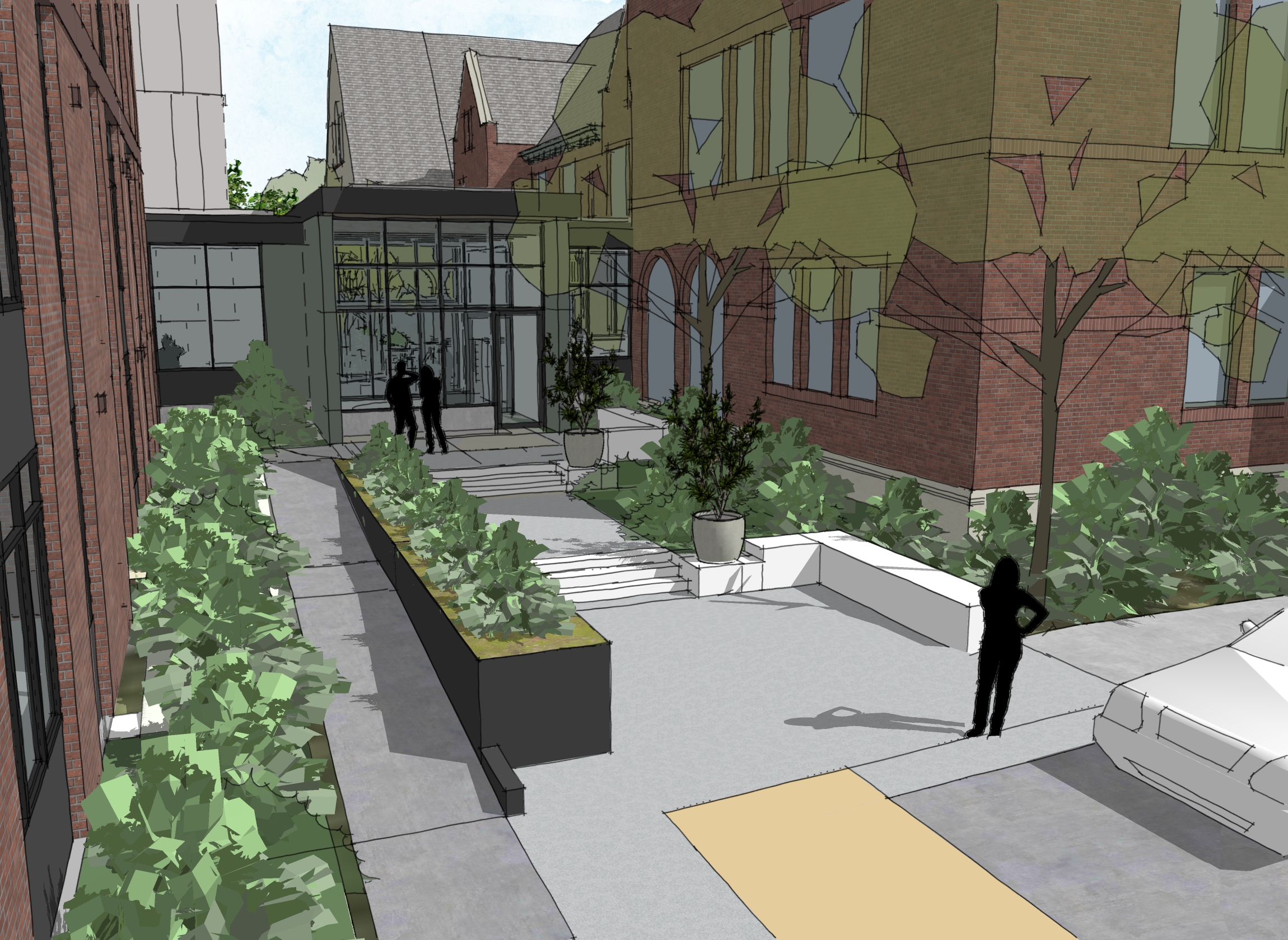
The project design is progressing thoughtfully and intentionally. In its current concept phase, the architecture emphasizes massing and material choices that complement the adjacent cathedral and St. Nicholas School, ensuring the new development fits gracefully within its context. We are actively engaging community members and future residents to help shape the final design and amenities. We invite you to share your input through our survey as we refine the next phase of the project.
How is the community involved?
The project’s Community Engagement Plan is currently in development and is intended to create meaningful opportunities for neighbors, stakeholders, and future residents to share input and feedback. Through this process, the community will help inform and shape key features of the housing development, including design elements, resident services, accessibility considerations, on-site amenities, and public-facing spaces. Community feedback will be gathered and thoughtfully evaluated to identify feasible priorities that can be incorporated into design documents, operating plans, and funding strategies. The development seeks to reflect community needs and aspirations while remaining financially sustainable and aligned with a clear, lasting public purpose.
What is the project timeline? When will it be finished?
The project is currently in the late design and permitting phase.
- 2026: Public funding application submission
- 2026–2027: Securing final permits, Landmarks Preservation Board approvals, and final funding
- Late 2027: Tax credit closing & permitting
- Late 2027: Target for groundbreaking
- 2028–2039: Construction phase
- Late 2029: Anticipated completion and resident move-in